REMAPPING
It has been twelve years since Davyd Whaley died.
The number twelve. Twelve marks the completed cycle. Twelve months, twelve hours on the clock face, twelve signs moving through the full zodiac year — it’s the number at which the circle closes. Not thirteen, which is already the next thing, but twelve: the last count before the wheel starts again.
A twelve-year-old stands on a threshold — not yet adolescent, no longer simply a child. If my grief is now that age, it’s exactly the moment when it stops being what it was and doesn’t yet know what it’s becoming.
They say twelve years is long enough for a loss to weather into the landscape. But it still stings, here, on this October morning in Vancouver. Grief follows its own cycle, not the calendar’s. Twelve is only a number. I notice how much I want it to mean something.
The sharpest part of my grief passed years ago, and I am no longer immobilized. What stayed was built into the frame, and the wound is load-bearing now.
Still, sometimes the wind rises, and I can hear it in the beams — a low note — and I am reminded once again of what I have lost.
· · ·
Davyd was my husband, and a painter. He moved through the world at a different frequency than I did — more porous, more easily flooded by what the rest of us learn to filter out. We had ten years together.
On the Sunday he disappeared, he was edgy and acting erratically. I was tired. Tired in the specific way that comes from holding another person’s fragility for a long time — carefully, with love, but with the accumulated weight of the holding. He couldn’t find his keys. I helped him look for them, and they were in the side pocket of my car. I was irritated. That is what I gave him as a last exchange: my irritation, small and ordinary, over keys.
I thought he was going to the studio to paint. This seemed like the right read. Davyd painted when the world became too much. The studio was where that porousness could be made into something rather than simply endured. I let him go even though I knew he wasn’t in a good place. I thought: the studio will help. I was wrong. He never went to the studio. I did not know where he was for three days. He took his own life sometime between Tuesday night and Wednesday morning in a hotel room near our home.
I will never know the exact hour. I will never know the hotel room’s darkness. The not-knowing has its own shape, and I have learned to carry it alongside the grief itself — a different weight, held in a different part of the body. Twelve years of the keys in the side pocket of my car. Twelve years of the word irritation applied to a moment I have turned over in my hands.
· · ·
Mary-Frances O’Connor, in The Grieving Brain, writes that grief is a form of learning. The mind keeps predicting the one who is gone. I reach for the phone, I listen for the key in the lock, I wait for the voice I recognize. But the world says no, and my map is redrawn little by little.
Yearning lingers in a gap between what my mind expects and what is actually true. The bond goes on, but what has changed is how I live beside it, what I do with it. And this is my work. It will take the time it takes.
I lost the years I imagined I might have had with him. I keep working out my relationship to those lost years. Sometimes I think I do that work best in my dreams.
I dream of Davyd often.
Several nights ago I was looking for him at a specific address, and the address kept changing. The more I try to find him, the more the location moves. Grief is the same. It’s supposed to live at a fixed address: the acute period, the identifiable stages, the first years. But instead it shifts and cannot be pinned to the place I thought I knew. Twelve years on, it still changes form. The rooms are real. They are just not where they were listed.
Sometimes Davyd is one figure among several, gathered together with the others I have loved and lost, or loved and released, into a single body. Sometimes he merges with my mother and then separates again. When that composite appears, I cry, from sadness but also from relief. They are together in the dream, in the loving way they were when both were alive. I am weeping for what my mind cannot yet say: that all of it is connected, and that this loss does not stand apart from the love that came before it and the love that followed.
In other dreams the grief becomes a weight with nowhere to go. There is the paperwork of death — the documents that close what love opened, the papers, the journals, the letters, the emails. They become a stone I carry into rooms where it has no place: the family table, the office, the set. I keep the stone at my feet, out of sight and within reach. I will not let it out of my custody. The world has not made a vessel to hold this stone beside ordinary things. I have work to do, and I cannot ask anyone to take on my load, so I keep carrying it.
Davyd appears to me another time as himself, but he’s hesitant. He is present and recognizable, but something in him does not fully arrive. I reach for him. We embrace, but it is not enough.
I am in a car, and it’s stalled. It needs repair. Davyd is somehow the one through whom the repair is meant to come, but it doesn’t. We move through narrowing passages in the car without momentum. When we reach open ground, we still have no propulsion.
Then a dream comes that I’ve been building towards. Davyd returns as himself, with all his best qualities intact: the tentative happiness, the kindness, his singular beauty. This dream gives him what his life denied — a completion, a reconciliation, a peace. He seems to have other things going on. He cannot stay. I watch from a door as he goes back to the life the dream has granted him, and the thought that arrives is an instruction: I must be at peace with what comes now, even as it’s without him. The must is the work still ahead. The peace is not yet mine.
In the most tender of the dreams, Davyd has been staying elsewhere (the dream continues to be precise about this geography of the dead), but he comes to visit me. He agrees to lie down with me for a while. I no longer have to accomplish anything. I do not have to help him, or heal him, or figure anything out. He holds me instead, and he asks how things have been. I tell him: not always so good. Then there is silence, and there is the holding. The restraint is its own form of love, presence within the limits of what presence can be. He communicates something without saying anything, and it is enough.
I have stopped waiting for the dreams to resolve anything. They renegotiate, and I take the contact on the terms offered.
When Davyd asks how things have been, I give him the current weather I’m standing in: not always so good. That is only half the answer. Much of the time it is fine, and some of the time it is better than fine. I am working. I am renovating my mother’s house. I am making a life in two cities, with purpose. The rest of the answer is that I am well enough, often, to be glad of it.
· · ·
Last night I dreamed I was at a crossroads, deciding which road to take home. One is a road I have always taken, with its landmarks and every turn known. The other is unexplored. I hesitate because it is somewhere I’ve never been. In the dream, I am alone. No one walks with me to tell me which way to go.
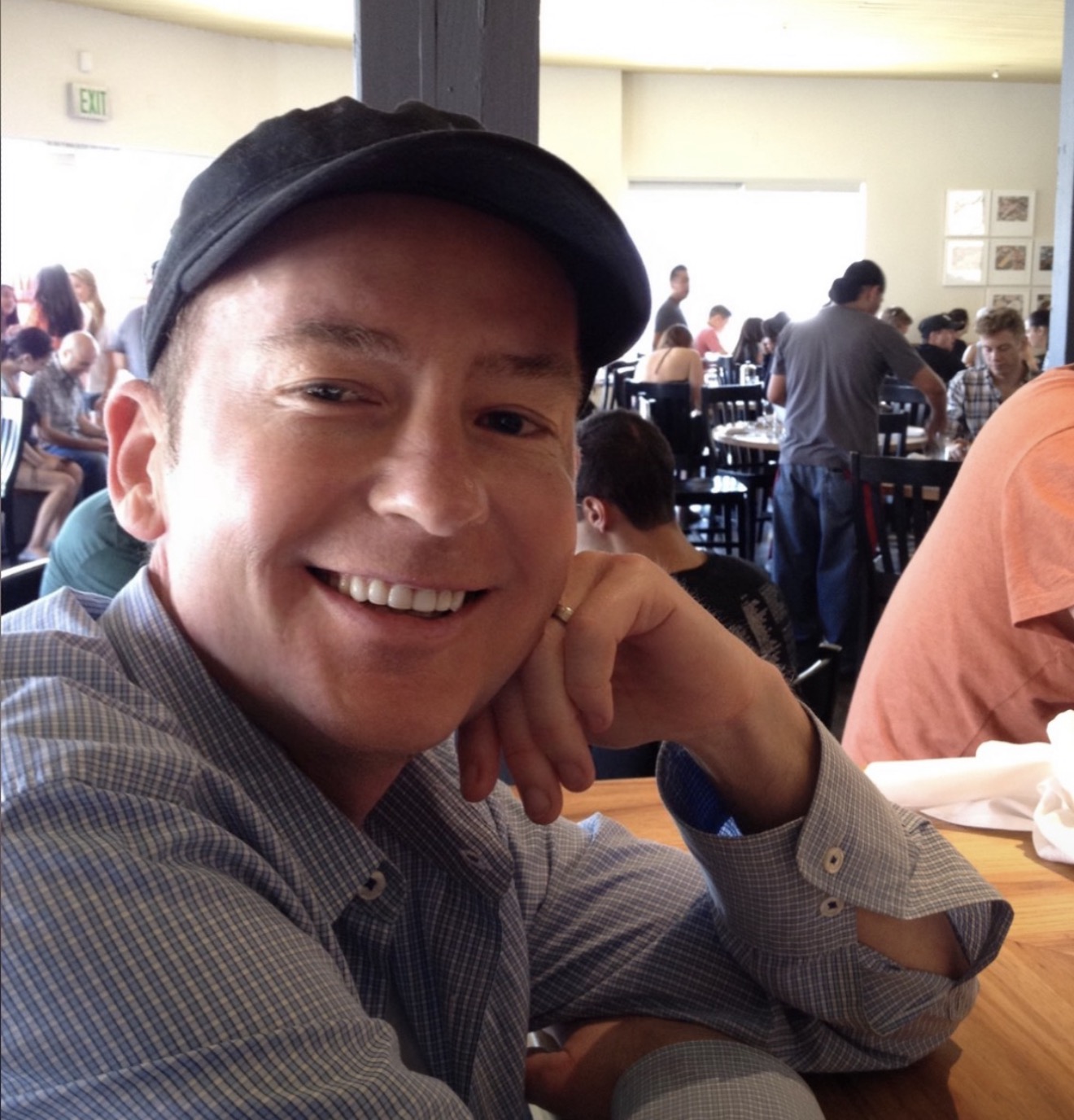
This morning I woke to a photograph of Davyd on my laptop, one of the old pictures the machine turns over on its own, the kindly algorithm that seems like synchronicity. I was glad, whatever sent him.
For twelve years I have looked for landmarks that locate me in space and time: the date on the calendar, the small rituals that give me comfort, the places where the loss is clearly written on a map. But I am ready to leave the landmarks behind.
I won’t say Davyd will guide me down these new roads. I don’t know that. But I do know I carry him, and I’m grateful for his face this morning. In my dreams I reach for him, and we touch, even briefly. And I am glad just to touch him, and to say, in the touching, that I understand we are now on two separate roads.
There are lines I love, from the Rilke poem, Requiem for a Friend (translated by Stephen Mitchell):
Help me, in saying it, to understand it.
Do not return. If you can bear to, stay dead with the dead. The dead have their own tasks.
But help me, if you can without distraction, as what is farthest sometimes helps: in me.
I think about the dream where I stand at a door and watch Davyd go back to his life. I could hear that dream as a door closing. I have decided instead to hear it as good news: he is well where he is, busy, content, and not waiting for me.
Twelve years ago today he died. Behind me is the road I know by heart. Ahead is open country, like the Nevada desert I crossed early this year with no idea what to expect. It astonished me. I choose it. I choose it gladly. Davyd has his own work, and I go to mine.
Vancouver, October 15, 2026

Beautiful Norman. This really touched me, “ I am weeping for what my mind cannot yet say: that all of it is connected, and that this loss does not stand apart from the love that came before it and the love that followed.”
Thank you. Sending my love to you.