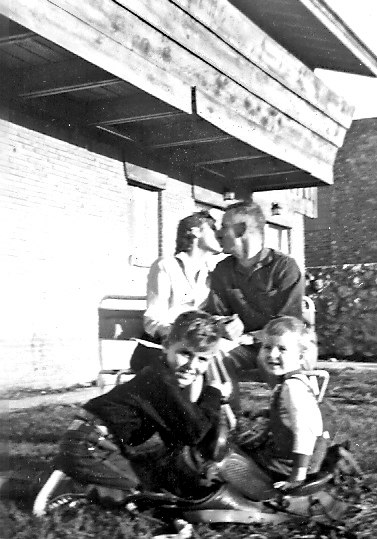
DREAMS OF SANTA FE TRAIL
I wake in Vancouver, and for a moment, I am still standing in another house. It is raining outside my window. It has been raining in the dream too, as if the two skies were a single sky with a door left open between them. I lie still and let the dream finish, leaving me the way smoke leaves a room, and what stays behind, always, is the house. The one that burned.
The house I dream of is gone. It caught fire decades ago. Then someone else rebuilt it — same address, same general shape — but it became something my sleeping mind refuses to recognize. My psyche keeps the blueprint of the original, and it always returns to a floor plan that no longer exists anywhere on earth except in my imagination. It means the only place I can still meet my parents as they were then is one that has ceased to be. I find this unbearably sad, but also a mysterious gift. The house I lost to fire is the one house I am never able to lose.
The Texas light has a certain quality in my memory — buzzing, humid afternoons and a white glare that flattens everything at noon, but turns gold and forgiving by six. My mom and dad are inside that light and they ran on entirely different frequencies. My mother moved through the rooms with grace made visible: luminous, unhurried, absorbing whatever chaos the house produced without being diminished by it. Hers was the only face I trusted without reservation. My father, on the other hand, was a weather system. His care for us was never in doubt, but I learned to read the sky before I spoke to him — gentle most days, and then a silence that filled the hallway like pressure before a storm. He was coiled. Tender in a way that never quite reached the surface.
They arrive in my dreams now, more myth than mother and father, and I try to piece them back into people. I go back — to the far west side of Fort Worth, up the hill to the house on Santa Fe Trail, to find whatever is left of them there.
· · ·
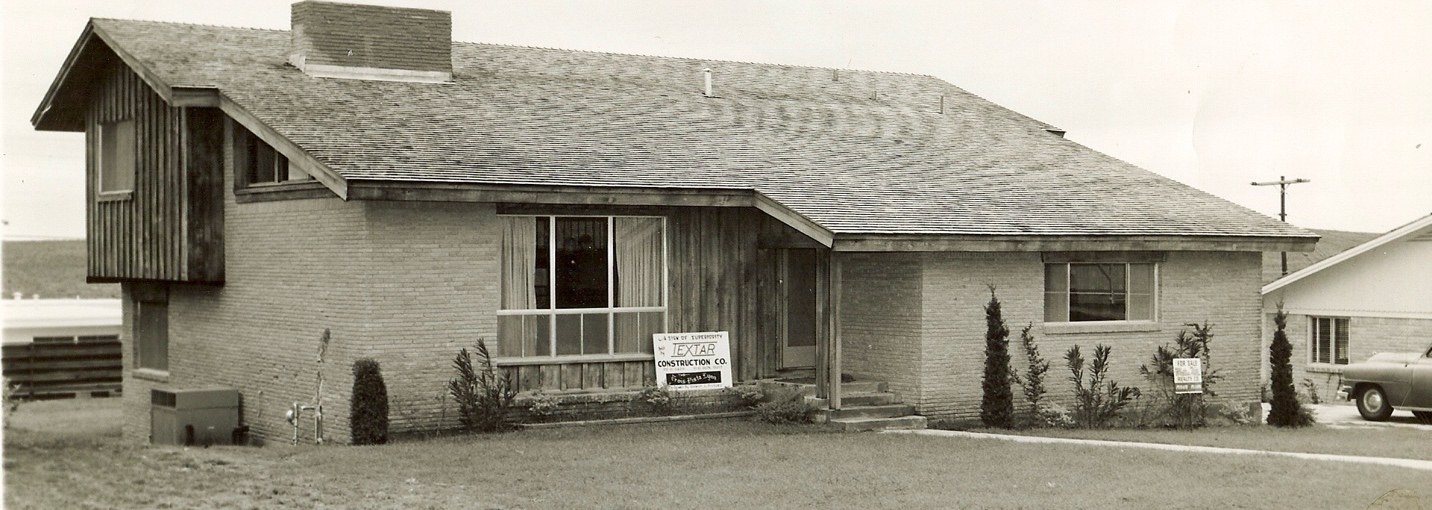
The house, if I draw it now, comes out of the dark in sections, a cutaway showing every floor at once — my father was an architect and an engineer, and designed this house himself. It was a split-level, which was simply how I viewed the world as a boy. Now I see it as my family’s own architecture. His study was at the bottom of the house, the lowest room, cool even in August, smelling of paper and pipe tobacco and something else I couldn’t name. I now believe it was Germany — 1944, the year he flew bombing missions over a country he was too young to hate with any precision. It was a year that came home with him and never fully left the house again.
At the very top of the house, in the opposite corner, was my parents’ bedroom, and between the two — between the buried study and the high room at the top of the stairs — were the rooms where the rest of us lived: my sister’s bedroom at the other corner, the hallway with its cedar smell, the bedroom I briefly shared with my twin brothers, before they moved into a converted garage: a twin bed on one wall, opposite their bunk beds. I have gone back to my room in dreams so many times that I can walk it blind. I remember its blue walls and Early American curtains. I return as I sleep and find beloved Eloise cleaning the room — she kept the house in order when I was a boy. In one dream, I spill coffee on a quilt my grandmother stitched for me by hand — a treasured possession that still exists, that rests on the back of a sofa right now as I write this sentence.
At the side of the house, there was a gate between our driveway and the backyard. It was wooden and a little loose on its hinges even then. In my dream, I think, “This gate is almost as old as I am.” It has stayed with me longer than almost any other image from those years, because of what it represents: the public self, facing the driveway and the street, ready for whoever might be passing by; and then there is a private self, out back, where I lived my boyhood.
At the front of the house, up a tiny set of steps, there was, is, and will always be the porch light. In one dream not long ago, I approach it at night and the porch light is off. My parents are not there. That was all there was, and it undid me, because a porch light left on tells the world that someone is home, someone who is waiting. But the porch light is off and it becomes clear that no one is there any longer.
· · ·
We were a middle-class family. In another dream, there is a large house above ours, on the rise of a hill. It belongs to a nameless family with more of everything. I stand out front with my brothers and my sister, all four of us looking at this mysterious house that never existed in waking life. It’s an early geometry lesson: some families sit higher up than others, and ours is not the one on the hill. Each of us wants different things, and each of those things stays just out of reach, so instead we learn to find the place where we fit and feel comfortable.
Here is one of the ways a mercurial father, a working mother, and a family of modest means all combined into a type of childhood watchfulness — I watched the weather inside the house and the gradient outside it. I learned to do both without appearing to do either. Am I safe here? Is it stable? Would any of us be happier somewhere else?
Nevertheless, ours was a real home. We were fed, we were clothed, my mother’s example was everywhere in it: an uncomplaining, even welcoming acceptance of what we had. It taught me to do the same, while my father toiled hard to make sure what we had was enough.
The neighborhood itself was full of children, the way whole neighborhoods used to be before anyone thought to schedule a childhood. Our backyard — the one behind the rickety gate — was one of the good ones, the yard the other children remembered fondly decades later. The summers were long there and the trees held a particular green light in the late afternoon. My neighbors and I disappeared into the games we invented ourselves.
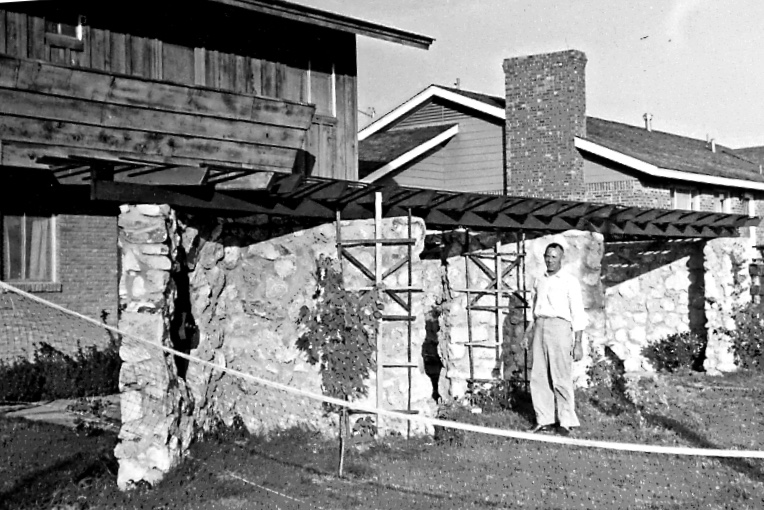
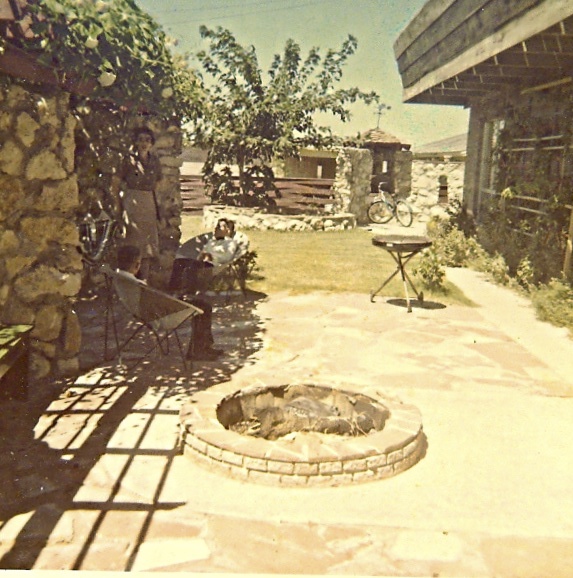
My father built that yard the way he had built the house that stood above it. He had trained young, in the Civilian Conservation Corps straight out of high school, in the discipline of shaping landscape and structure by hand, years before he ever became an architect — and something of that early training never left him. He raised a series of rock walls by himself, stone by stone, and strung trellises along the top of them, thick with ivy. In the gap between two of the largest walls, he hung a hammock where I spent whole summer afternoons doing nothing in particular, which is to say doing everything that mattered. He built me a sandbox out of the same stone, low-walled and permanent, because permanence was his goal. That backyard — expertly engineered — was the cradle of my dreaming: he built it, then receded, most days, into the room at the bottom of the house, leaving the rest of us to live inside what he had made. He never played with me in that backyard. But some nights he’d sit outside in the dark. I would approach and talk with him quietly, his burning cigarette the only light. But he was always just out of reach.
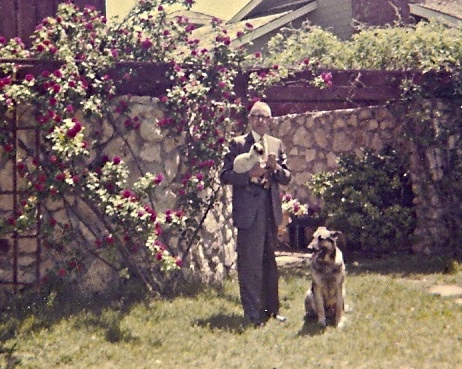
I have a photograph, one of my favorites of him, standing on a bright Sunday morning, beside the rose bushes he had planted. There is a dog at his feet and a cat in his arms, and he is at ease beside the things he had made. That’s who he was: a man who designed houses, built walls, planted roses, kept animals near him, and gave his family a home to enjoy, even on the days he could not find his way out of the room at the bottom of the stairs.
· · ·
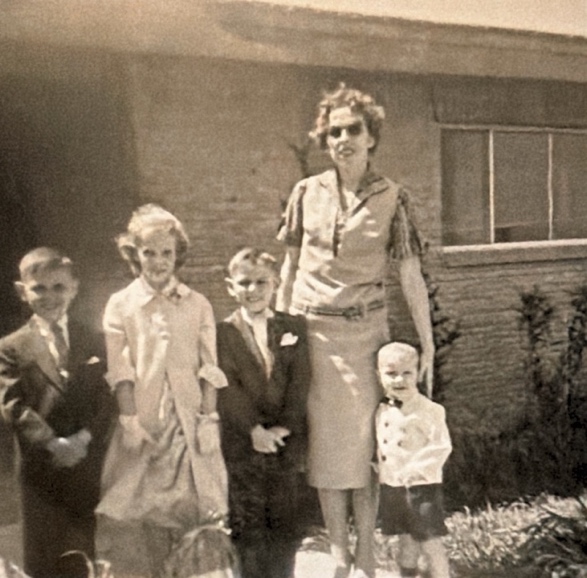
My mother’s name was Betty Bob, and she never advertised the hardness of her own life. Her father lost his bakery in the Depression; her parents’ marriage was troubled; she was in an automobile accident as a ten-year-old that killed her grandmother and left her functioning as her own mother’s caretaker. But none of it dulled her curiosity. She became a journalist.
In my dreams, I often see her at the kitchen counter, working on something, at her typewriter, or laying out pictures for magazine designs. She was vitally, unapologetically engaged with her own life — pursuing her own interests, setting an example by being fully herself in front of us. And yet always present: in the room, in the conversation, directing the school talent show, beside each of us during the fevers at two in the morning. In dream after dream across these last years, she is doing some version of the same thing: gathering. In one of these, it is raining on the house. She is out on the patio with me, pulling the good Moroccan rugs in from the wet, before the rain ruins them a second time, because they had actually already been ruined, years before, by an overflowing fish tank at my place in California. She had been sad then about the rugs, somewhat sorry that she’d given them to me, as they reminded her of other times and it felt like loss. In my dream, she is saving them, the way she saved almost everything, without complaint.
In another, she is arranging flowers she had not bought herself, flowers that are already starting to wilt. When I tell her that I should have brought her better ones, fresher ones, ones I had chosen myself, she only smiles and says we should go out to eat: no reproach, no accounting of what I owe her, just a redirection toward the next good thing, toward nourishment, toward joy, which is the very word she used to me more than once when my own life had come apart in one of the ways life does. She would tell me, you will find meaning in it. You must find your way back. She said it to me from inside plenty of her own bad years, and she meant it, and I have needed it since she died.
In a third dream, she drives, unbothered by a driveway that looks, to my worried eyes, entirely blocked. She backs the car around the obstruction in some maneuver I can’t quite follow — calm the entire time, while I sit beside her, certain we are stuck. We never are. She smiles, as if a blocked path is information, not a verdict.
And then there is a dream where I come home to find her jewelry scattered across the floor of my childhood bedroom — not lost, not stolen, only disordered, spread in front of a bureau, and lying among it, oddly, a small model of an atomic structure, the kind you’d find in a classroom, the invisible architecture that holds ordinary matter together made suddenly visible and dropped into the one room in the house that had always been mine. I pick it up in the dream and put it on a shelf. It is there to remind me of her.
· · ·
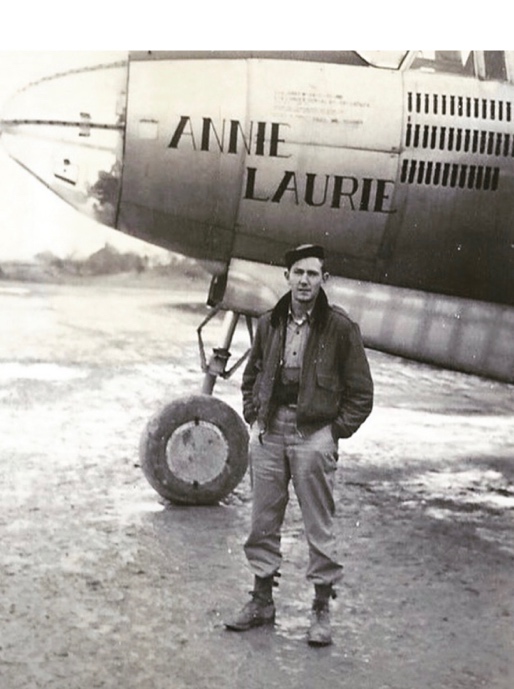
My father’s name was Ernest, and it is a harder name to hold steadily in a sentence, because he was a harder man to hold steadily in life. At the age of twenty, he flew as a bombardier over Germany, targeting, among other things, the rail lines that ran the machinery of that war. He almost died, more than once, and he saw many of his companions die. Something in him did not come all the way home from those missions, or came home changed into a form none of us, including him, I suspect, ever named. What traveled back with him, and lived in our house for the rest of my childhood, was a temper the whole family learned to avoid, without ever discussing it. We read the weather before we spoke at breakfast. I became a small meteorologist of someone else’s moods rather than relaxing into a parent’s steady love. I never knew, walking into a room, which father would be in it.
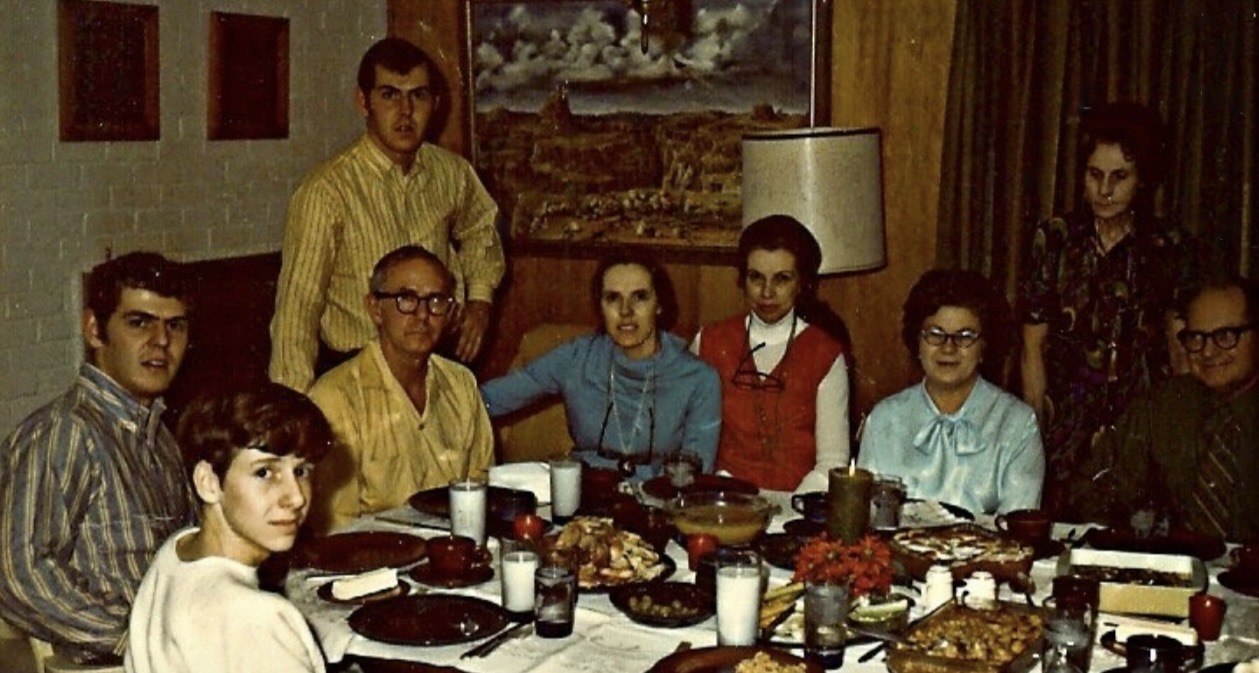
I remember the dinner table, the reading of him, as he came through the door — a whole household’s nervous system tuned to the pitch of his footsteps in the hall, the set of his jaw. On a good night, he was the kind of father who could make the whole table laugh. On a hard night, the air itself seemed to change pressure, and we ate quickly, grateful when the meal was finished. I learned to love with one eye permanently open, watching the door.
And yet I never doubted, underneath the weather, that the love was real. It simply lived behind glass. He drove a white Corvette for a while. I have dreamed of that car more than once since his death, always slightly transformed, arriving as a gift, which I’ve come to think is my psyche slowly working something out — him making an offering, me finally able to forgive what I couldn’t at nine or at nineteen. In one dream, he appears at a rest stop, of all unlikely places, on a long drive, and offers — for what I believe is the first time in all these years of dreaming him — to help me with directions.
Years after he died, I found a small vinyl bag of plain gray stones my mother had kept in a closet, without any explanation I could see. I teased her about it — what possible use could there be for a bag of rocks? She told me, evenly, that they were his: stones he had carried, as a young man, from the homestead where he grew up, before the war and its aftermath. She quietly kept them, unexamined, out of respect for a man whose interior she could not completely reach, and whom she loved anyway, weather and all. I put the rocks in a glass jar where we could see them. They remind me of the walls he built for us to enjoy; something permanent, he hoped, as an expression of his love.
· · ·
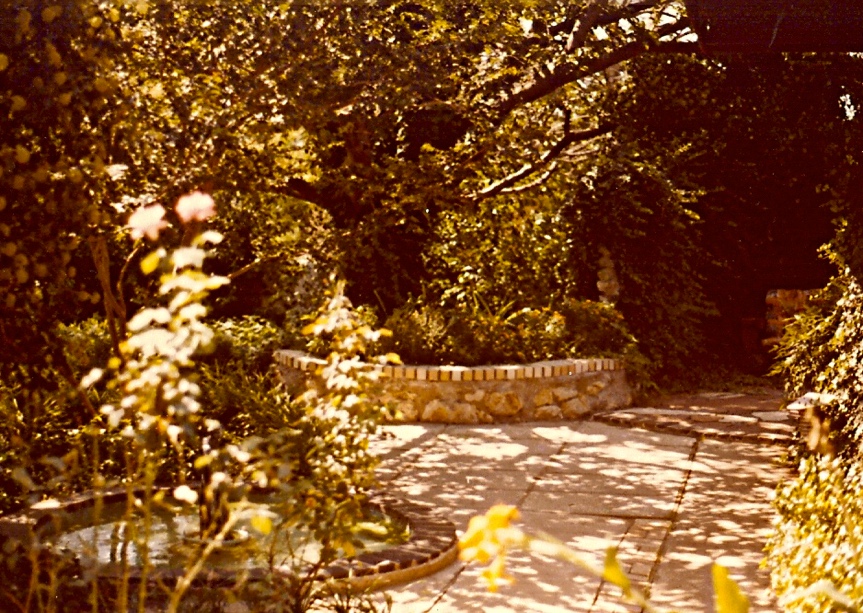
I have another photograph of our backyard, taken the weekend before we sold the place to others, in 1983, after twenty-five years of living there. The walls had gone shaggy under decades of ivy, the balcony boards soft with rot, the roof sagging the way things sag when they have held on exactly as long as they needed to.
I dream the leaves under those trees have turned, in the middle of summer, red and early, as if the year itself cannot wait for autumn to begin its retreat. I am the only one who notices, in the dream, while the party around me goes on as if nothing is changing. I think about that image as I look out the window now. I am the one, in my family and maybe in my life generally, who notices the early turning. I noticed it as a boy, standing at the gate. I notice it now, at seventy, standing at a much larger one.
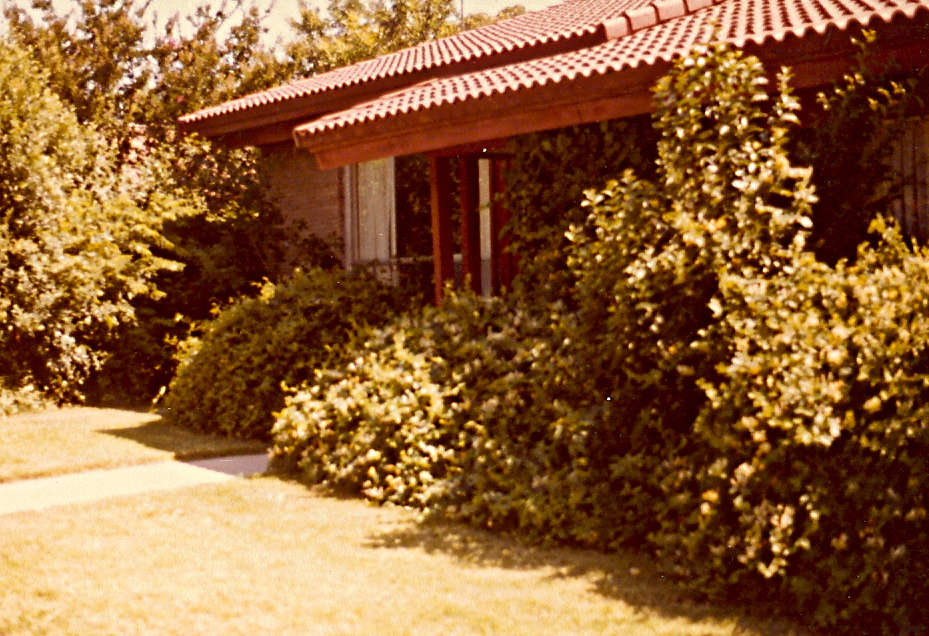
And I keep returning — the dreams keep returning me, more accurately, since I have never once decided to have one — to these various thresholds. The gate that will not quite close. The porch light, on or off. A side door I remember as always slightly hard to lock, the kind a family lives with rather than fixes. And then, in one dream, it suddenly locks easily, the first time in the whole run of these dreams that it simply works. I wake with the sensation of finally releasing my held breath. I do not think that door is about hardware. I think it is about a family developing an acute sensitivity to what held and what didn’t. That the door finally holds, all these years later, feels like resolution.
I fall asleep again and there is a hill, this one crowned with the small church we drove to as a young family, all of us in the car together, my dad behind the wheel, my mother, unworried, somewhere in the conversation. However, in this dream, we never arrive. The church was never where any of it was going. The point was always the car, the six of us moving together toward something we trusted was there, even when we couldn’t see it yet.
· · ·
I am, right now, an old man overseeing the renovation of a house that is not the house I actually dream of—rather, it is my mother’s house. It is the house she lived in during her later years, the house she moved to after my father died. It is the house where she consolidated her life. I have decided to keep it. My work is this: to take the container my mother left me and make it fit for what comes next. But it is not and never will be the container that made me. That one is gone. It was gone before I was old enough to mourn it properly, replaced so completely that for years I did not think of it as a loss at all, simply as a fact, the way you don’t grieve a childhood address the way you grieve a person. But I’ve been grieving it the whole time, in a language I didn’t call grief because it comes to me in dreams, arriving disguised as an early fall, as a rug pulled in from the rain, as my mother’s smile in the kitchen that is no longer.
Last night I dreamt of boxes of old journals and books stacked in a corner of a patio, left out in the weather, quickly warping. The dream is unambiguous about what I should do: bring them in and tend to them. The history is weathering. I do not think it is a coincidence that this image arises in the very year I have finally sat down to write the story I am writing now. There is a version of this reminiscence in which the boxes on the patio are simply boxes, and a version — the truer one, I think — in which they are this: the accumulated evidence of a whole family’s weather, left outside for decades because no one has carried it back in, and me, now, finally doing it, page by page, before the last of it is lost to a real rain, which will not stop simply because I wake up.
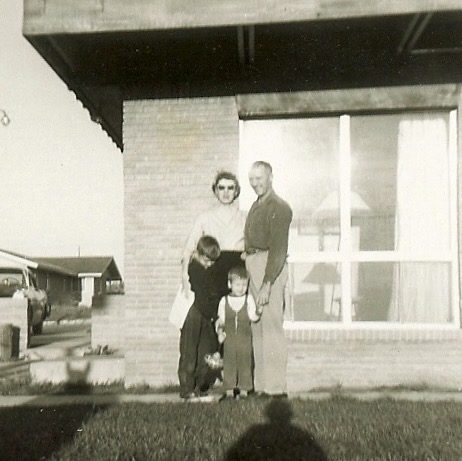
Here is what I have decided: I go back to the house on Santa Fe Trail because it is the only place left where my mother and father can still be young enough, and whole enough, and close enough for me to stand between them, the way I did as a boy. She’s in the kitchen or gathering the rugs, luminous and unhurried; he’s behind the door of the study, but then emerges late, with directions I no longer need but am grateful, even now, to be offered. I miss the house, I miss the shelter it provided for my life. I miss my parents. But the house burned, and my parents died — hers a very gentle passage, my hand in hers, at the very end; his, decades before, leaving a silence that has taken me most of a lifetime to stop mistaking for absence.
I do not know how many more years I have of waking up in strange rooms, after finding myself back on that particular street, at that particular house, before I understood any of what I have tried to set down here. The house keeps sending for me, and I go, gladly, the way you go when someone you love calls your name from another room.
Elegies often end in acceptance, in some kind of peace with the past. I’ve stopped expecting either. What I have found instead is this: the gate that is almost as old as I am, the porch light that’s sometimes still on, my father, late, at a rest stop, willing to help me with directions. And my mother’s smile, gently guiding me toward the next good thing. I am once more at the house, briefly, and it is enough to send me back into my waking life a little more able to do what my mother always told me: I keep going. I find the meaning in it. I find my way, again.
I remember your house. It stood out among the rest. It had architecture different than the rest on Santa Fe Trail. It had a beauty entirely its own. I remember seeing it from my back yard for I lived right behind you. Your father was a gracious man that wrote a book on building and dedicated it to my father.Who must have given him guidelines on construction. I wish I had known you and your family.